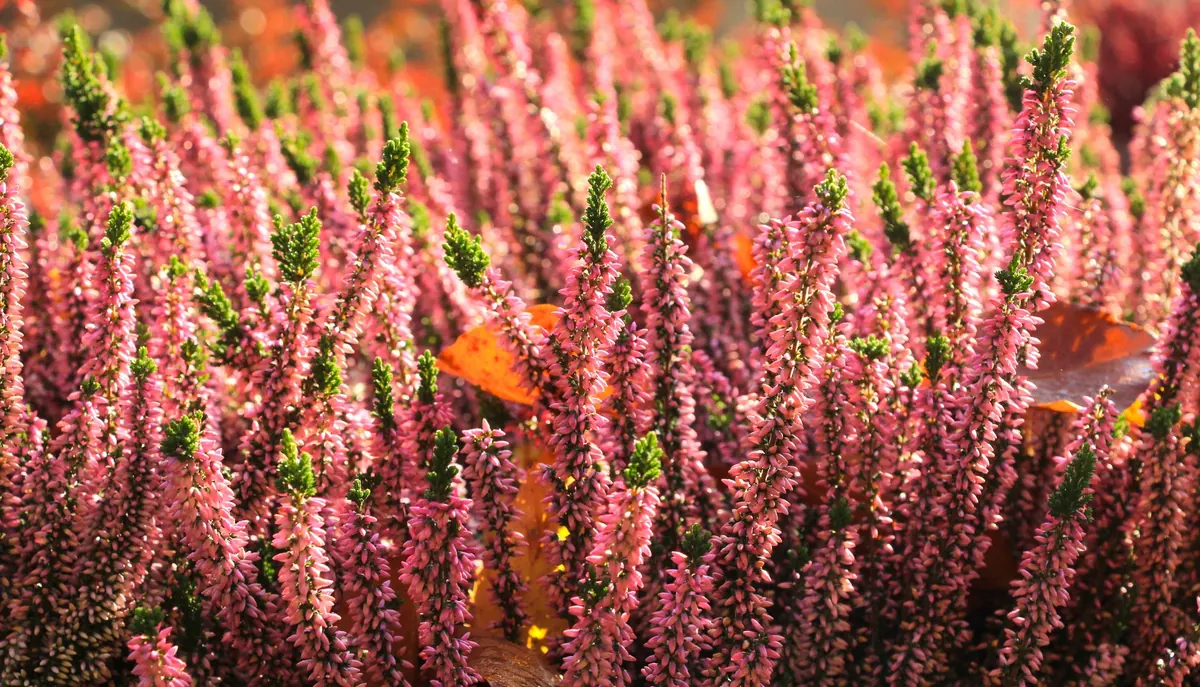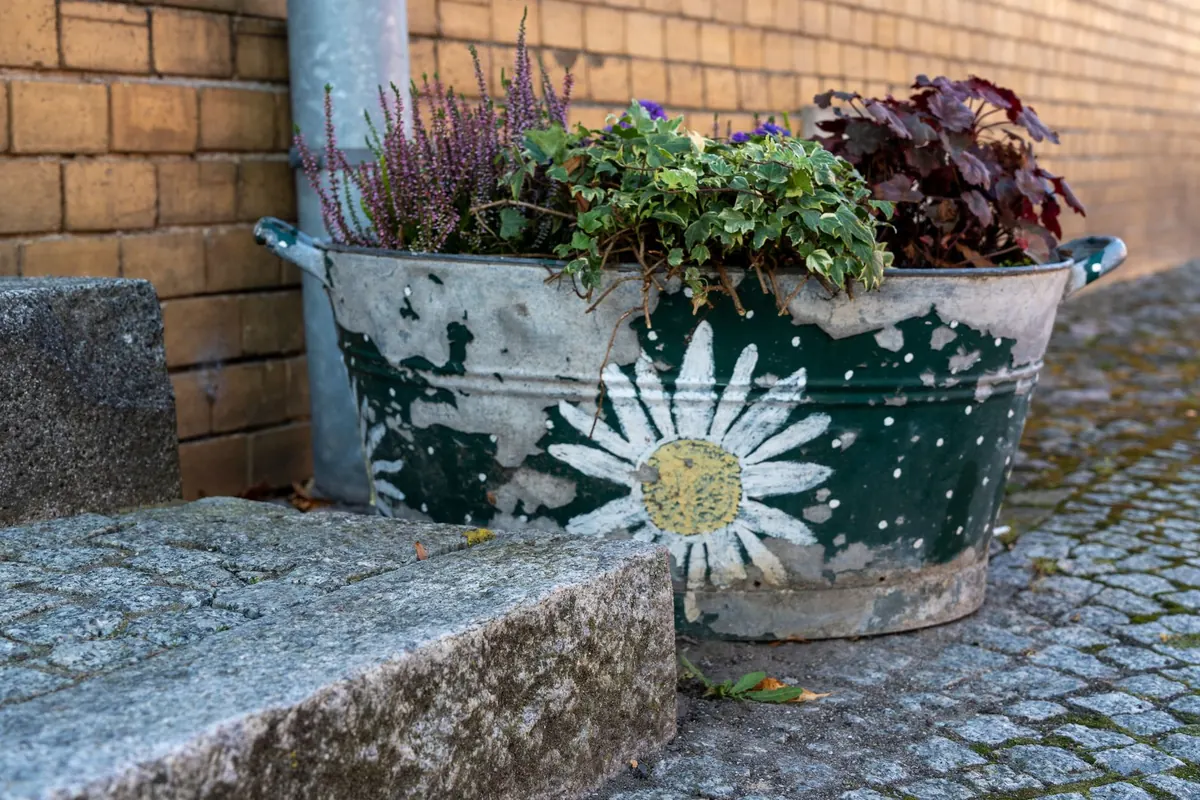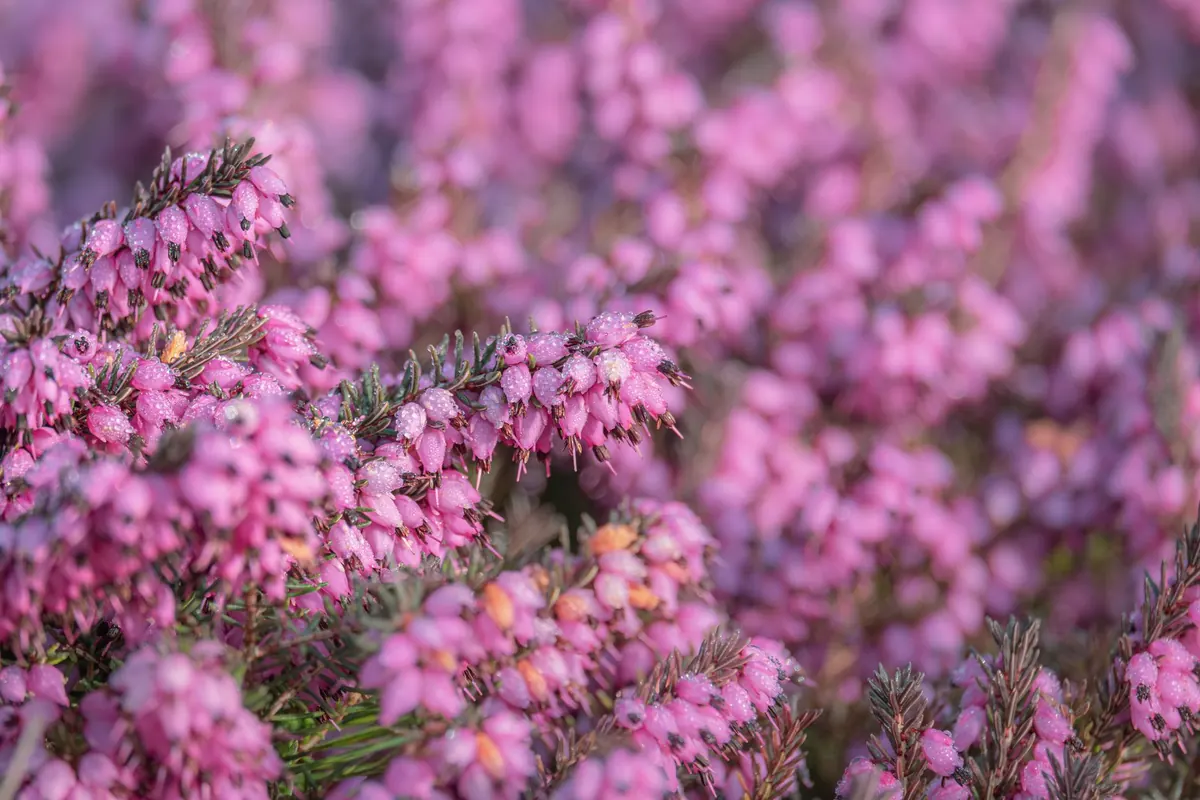
Heather has an image problem. Say the word and most gardeners picture a purple moorland in the rain, miles from anywhere — beautiful to walk through, impossible to copy at home. That picture is only half true. The same plants that colour a hillside will knit into a dense, weed-proof carpet on a sunny bank, along a gravel path, or in the awkward strip beside a driveway. They just need the right form, the right soil, and a little patience in the first season.
Most heathers sold in garden centres are compact selections of Calluna vulgaris, Erica carnea, Erica cinerea and Daboecia cantabrica — low, tidy, and slow enough to stay where you put them. Here are six ways to use them as ground cover, with the details that separate a real carpet from a row of sad little pots.
Carpet a bank you cannot mow
Steep banks are the classic problem: too sharp for a mower, too visible to ignore. Heather suits them because its roots are shallow and fibrous, binding the top few inches of soil while the canopy sheds rain and shades out weed seedlings.
Plant across the slope rather than straight up and down it. Setting plants on the contour slows water running downhill and gives each one a small ledge of soil to root into. Space them 30–45cm apart; 25cm gives faster cover if your budget stretches. On heavy clay, plant each one on a shallow ridge of grit mixed with ericaceous compost so the crown never sits in a puddle. If the bank is very steep, peg jute netting over the soil for the first winter, planting through the mesh.
Run a low ribbon along border and path edges
A single or double row of compact heather makes a soft hem that hides the scruffy base of perennials and slows grass creeping into beds. Use low, tight forms rather than vigorous spreaders, and set them 25–30cm apart. A staggered double row reads as a woven strip and looks deliberate.
Trim lightly after flowering with shears to keep the line crisp. Take off the spent flower spikes and a little of the green growth below them, but never cut back into thick, leafless old wood — most heathers will not regrow from it. Along a gravel path, plant 20cm back from the edge; the foliage will lean out over the stones without being trampled.
Use it as living mulch under shrubs
Bare soil under acid-loving shrubs is an invitation to weeds. A heather underplanting keeps the ground cool, holds moisture, and looks far better than scattered bark chips. It works well beneath pines, birch, pieris and rhododendrons.
Keep the plants 20cm clear of shrub stems so you don't bury the crown and encourage rot, and top-dress annually with bark mulch rather than manure or rich compost. Heathers on generous feeding grow soft and short-lived; lean soil suits them.
Let trailing forms spill over walls and ledges
Plant at the top edge of a low wall, a rock ledge or a raised bed and the stems will hang down and soften the stone. Gravel gardens and gaps between boulders suit the same approach: a 2–3cm gravel mulch keeps the collar of the plant dry and deters weeds.
In wall pockets, use ericaceous compost bulked out with grit. Thyme, sedums and small dianthus make good companions — they want the same sun and sharp drainage, and the mixed textures keep the planting from looking monotonous.
Paint flat ground in colour blocks
On level ground, the mistake is mixing cultivars. A drift of one variety reads as colour; one of each reads as clutter. Plant in generous shapes — a block 1.2m wide and 2m long of a single heather looks intentional even in its first year.
Plan the blocks so something is flowering almost all year:
- Winter to early spring: Erica carnea and Erica × darleyensis, the most tolerant of less-acid soils.
- Early summer: Erica cinerea, in purples, pinks and white.
- Midsummer onwards: Daboecia cantabrica, which flowers for months if trimmed after the first flush.
- Late summer to first frost: Calluna vulgaris, including gold and silver foliage forms that earn their place even out of bloom.
Reclaim rough or shaded ground
The dry shade under mature pines or birches defeats most ground cover. Heather copes, and on poor acid soil it often does better than grass. It also tidies the strip behind a shed, along a fence, or where an old lawn has gone thin and mossy.
One caution: heather is not a lawn. It will not take regular foot traffic, and a worn path through a carpet never recovers neatly. Keep a mown or gravel route alongside it and the planting will stay plump for years.
Getting the first season right
Almost every failure with heather comes down to the soil, so spend five minutes checking before you buy.
- Test drainage. Dig a hole 30cm deep, fill it with water, and see how long it takes to disappear. If it is still there hours later, plant on a mound or in a raised bed.
- Check the pH. Most heathers want acid to neutral soil. On chalk or limestone, choose Erica carnea and Erica × darleyensis, or grow everything in containers of ericaceous compost.
- Clear weeds thoroughly first. Heather will not outcompete established couch grass or bindweed.
- Plant in early autumn or early spring, while the soil is warm and damp.
- Firm gently, water well, and mulch with 3–4cm of bark or grit, keeping it clear of the stems.
- Water through the first dry summer. After that, heather manages on its own in most gardens.
Once a carpet has closed, the yearly work is almost nothing: one light trim after flowering, a top-up of mulch, and a walk round with the shears to keep edges in line. Do that, and a slope that used to mean strimming and weeds becomes the calmest part of the garden.
Photo: Ilo Frey / Pexels