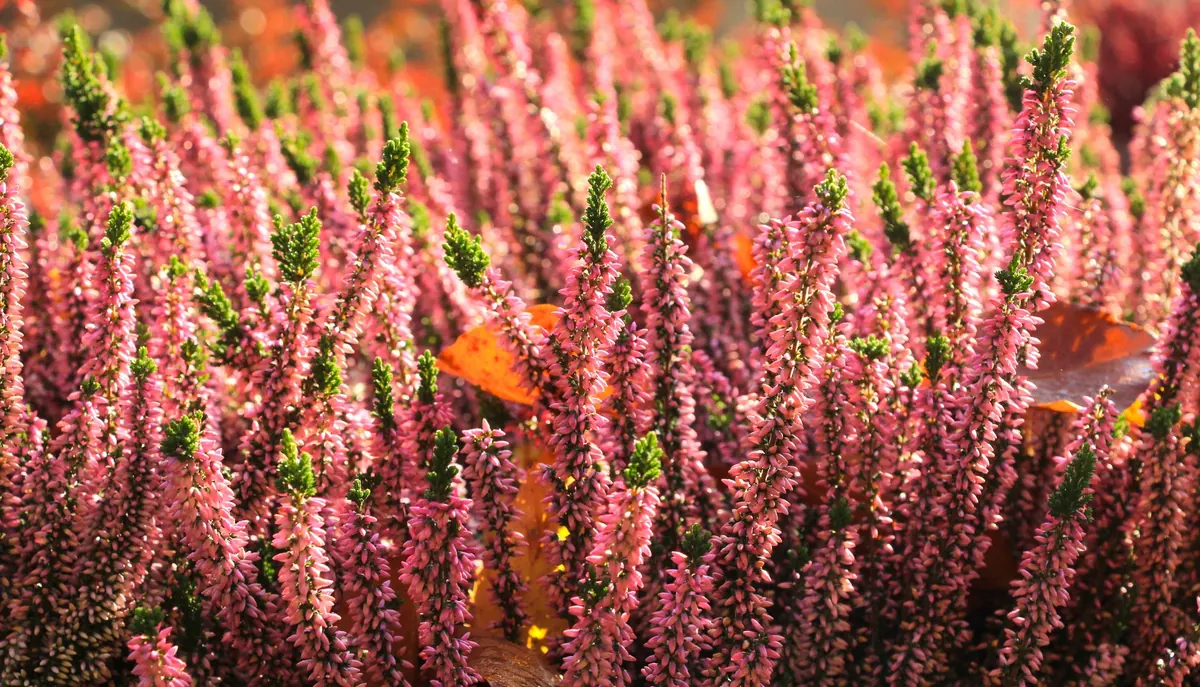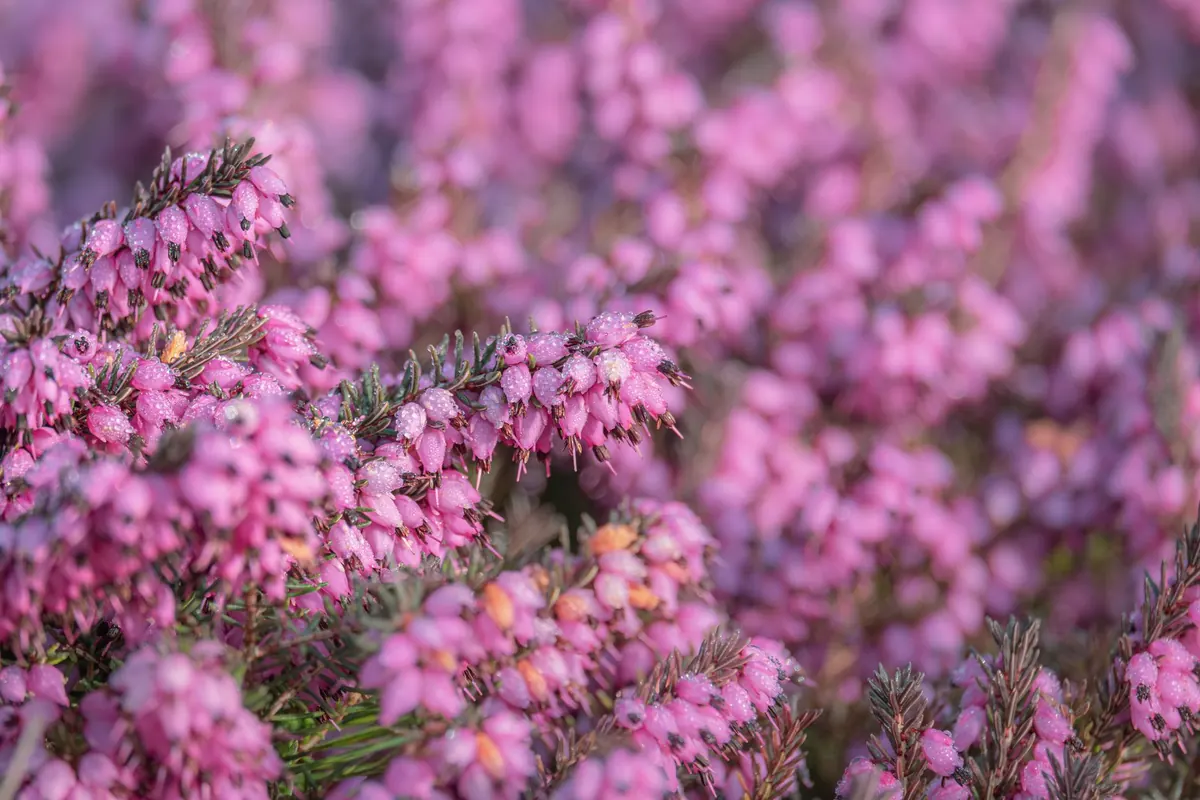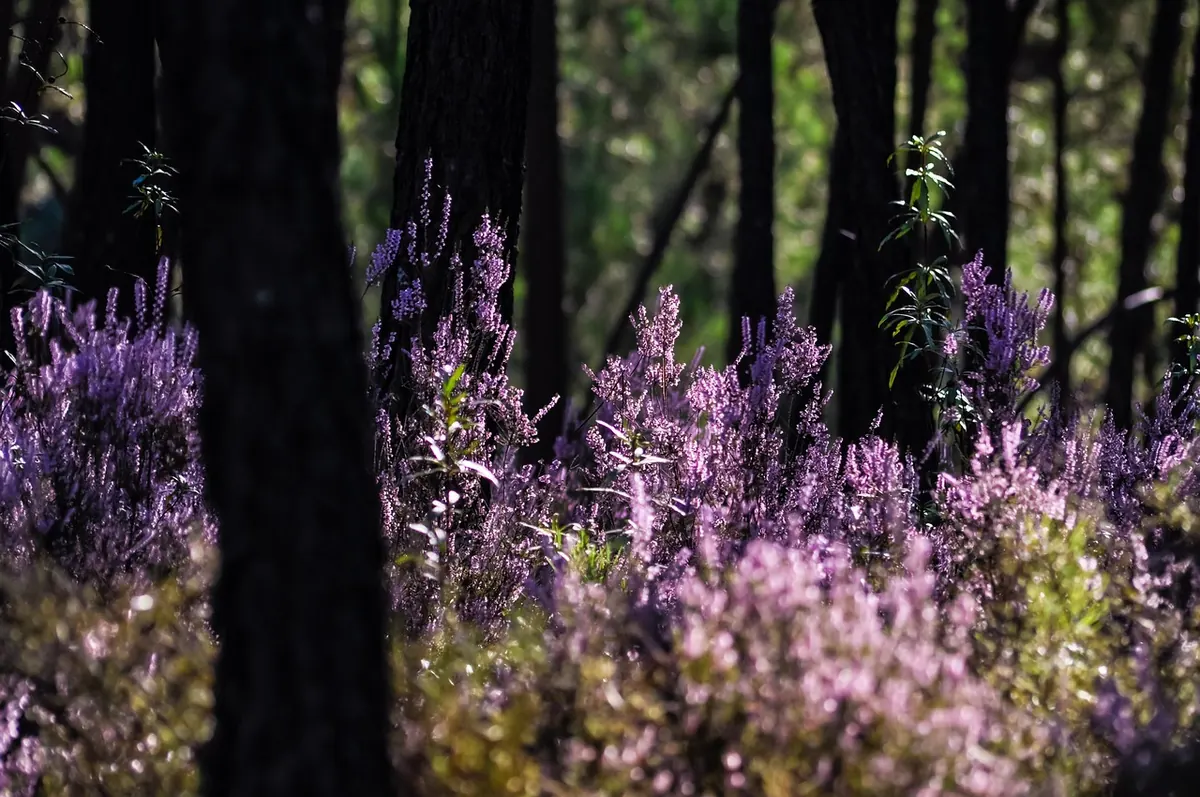
Heather has a reputation problem. Too many gardeners remember a dull brown patch at the back of a border and never try it again. The plants were not the problem; the soil was. Give summer-flowering heathers the acid, free-draining ground they evolved for, and they answer with months of colour, neat evergreen structure and a low hum of bees from June to October.
The twelve cultivars below are not a random list. Each earns its place on bloom time, habit or colour, and each grows well in acid soil that drains sharply. Paired deliberately, they keep flowers coming for five months with very little work.
Why these heathers suit acid, well-drained ground
The summer group — Calluna, Erica cinerea, Erica vagans and Daboecia — share firm preferences. A pH between roughly 4.5 and 6.0 suits them best. They want sun for six hours or more in summer, and soil that never sits wet in winter. Waterlogged winter ground kills more heathers than cold ever does.
In return they ask almost nothing. No staking, no spraying, no dividing. Many of them knit into a dense mat that smothers annual weeds, and several keep good foliage colour through the winter after the flowers have gone.
Calluna vulgaris: the backbone of a late-summer display
Scotch heather is the one to build around. Most cultivars open in July or August and carry on into September, and the foliage of many turns bronze, gold or near-black in winter. The flower spikes are upright and small, which makes them better for cutting than the fat bells of Daboecia.
Five worth tracking down:
- 'Tib' — semi-double mauve-pink flowers on a tidy, mid-height plant. One of the most reliable pink callunas and generous with bloom.
- 'Kinlochruel' — compact, with double white flowers that look crisp against dark foliage. Ideal at the front of a bed.
- 'Dark Beauty' — deep crimson, semi-double, and as showy as a heather gets. Plant it where you will see it up close.
- 'Finale' — pale pink softening to lilac, flowering later than most. Useful for stretching the season into early October.
- 'White Lawn' — low and spreading, it reads as a carpet of white in late summer and makes fine ground cover between taller shrubs.
Erica cinerea: bell heathers for early summer
Bell heather is the first of the group to perform, flowering from June into August depending on the cultivar. It is also the fussiest about drainage, and it wants the sunniest spot you have. Give it a raised bed or a sloping bank and it settles quickly; give it a damp hollow and it sulks, then dies.
- 'C.D. Eason' — vivid crimson-pink bells, free-flowering and compact. One of the best for a hot, exposed site.
- 'Pink Ice' — soft pink flowers set against foliage tipped gold and cream in summer, so there is colour before the flowers even open.
- 'Velvet Night' — deep violet-purple flowers on dark green foliage. Rich and moody; best partnered with something pale.
Daboecia cantabrica: the marathon bloomer
St Dabeoc's heath carries the largest flowers of the four groups — fat, dangling bells rather than tight spikes — and it keeps going from June well into October if you remove spent flower stems. It is the least hardy of the group, so in a cold, exposed garden give it a sheltered corner and expect a little dieback after a hard winter.
- 'Waley's Red' — deep magenta-red bells on a loose, airy plant. Superb with white heathers behind it.
- 'Alba' — clear white bells over the same generous season. Bright in light shade and useful for softening strong colours.
Erica vagans: the forgiving gap-filler
Cornish heath is the most tolerant of the group. It flowers from July through October and, unlike the others, copes with soil that is only mildly acid, even neutral. That makes it handy along the edges of a bed where the pH drifts, or where you have limed nearby.
- 'Mrs D.F. Maxwell' — rose-pink flowers on a strong-growing plant that fills space quickly.
- 'Lyonesse' — pure white flowers and an exceptionally long season. The cleanest white in the group.
Planting into acid, well-drained ground
- Test the pH before you buy anything. A simple home kit costs little. If your soil reads above about 6.5, grow the plants in containers of ericaceous compost instead of fighting the ground.
- Clear perennial weeds properly — couch grass, bindweed, creeping buttercup. Heathers will not out-compete them, and you cannot hoe close to the stems later.
- Improve the planting pocket rather than the whole bed. Fork two or three handfuls of ericaceous compost or leafmould into each spot, plus a handful of grit if your soil is heavy.
- Plant at the depth the heather sat in its pot. Firm gently with your knuckles and water well, even if rain is forecast.
- Space according to eventual spread: roughly 30cm for the small callunas, 45 to 60cm for Daboecia and Erica vagans.
- Mulch with pine bark or ericaceous compost about 5cm deep, keeping it clear of the stems. Never use mushroom compost, lime-based spent compost or bonfire ash.
If your tap water is hard, use rainwater for the first season or two. One chalky watering can do no harm; a summer of them gradually pushes the soil the wrong way.
Aftercare, pruning and a simple planting plan
Watering
The first two summers make or break a heather bed. Water deeply every week or so in dry spells, and let the soil dry slightly between soakings. Once rooted, the plants shrug off most dry weather without help.
Pruning
Cut Calluna and Erica cinerea back immediately after flowering, removing the spent spikes and a little of the green growth below. Aim to finish by the end of September so new shoots harden before winter. Daboecia is different: leave it through winter and tidy in spring, trimming dead flower stems back to the current season's growth. The golden rule for all of them is never to cut into the old, bare, woody centre. It rarely regrows.
A planting plan that runs June to October
Plant in drifts of three, five or seven of the same cultivar rather than a mixed row of single plants. Heathers look wrong dotted about one at a time, and drifts show off the foliage colour far better.
- June to August: Erica cinerea 'C.D. Eason' along the front edge.
- July to September: Calluna 'Dark Beauty' and 'Tib' grouped to one side.
- June to October: Daboecia 'Waley's Red' in the shelter of a low wall or hedge.
- August to October: Erica vagans 'Lyonesse' as the white counterweight.
Where to start
If you buy three plants this year, make them 'C.D. Eason', 'Tib' and 'Waley's Red'. Between them you will have colour from early June well into autumn. Then add a white — 'Kinlochruel' or 'Lyonesse' — to lift the composition, and fill in gaps with the spreading 'White Lawn'. Acid soil is not a limitation here; it is the whole reason the bed will work. Test the pH, plant in spring or early autumn, water properly for two summers, and trim once a year. What you get back is a low-maintenance carpet that looks after itself and hums from June to October.
Photo: mac231 / Pixabay