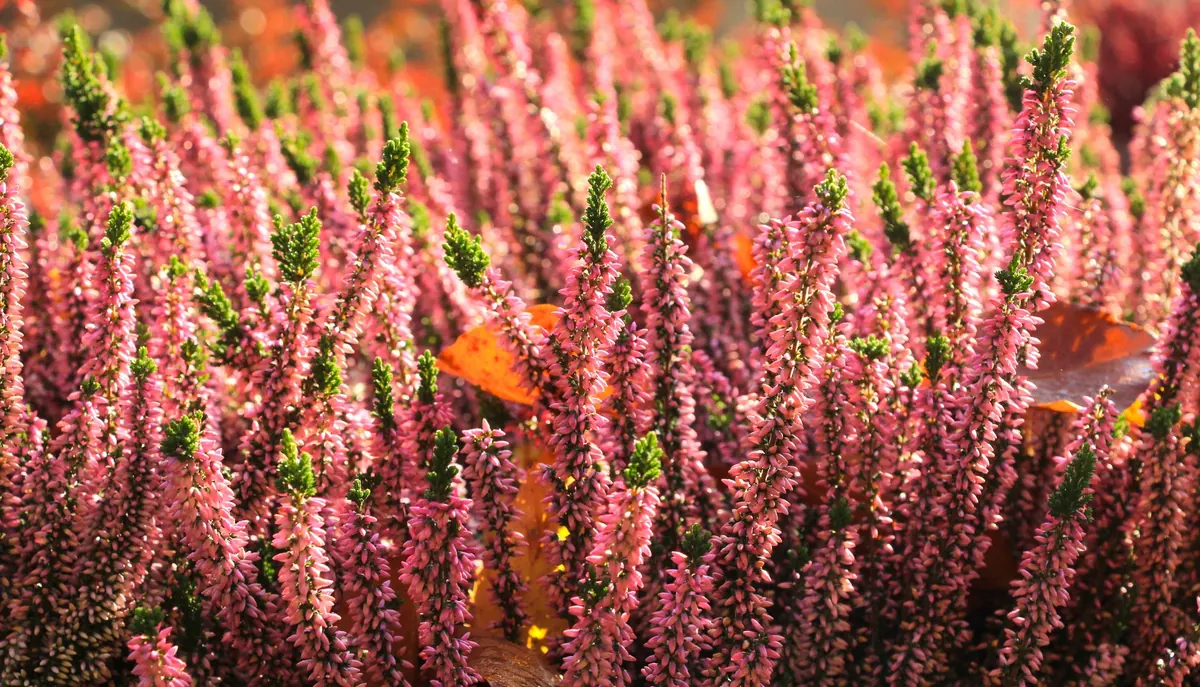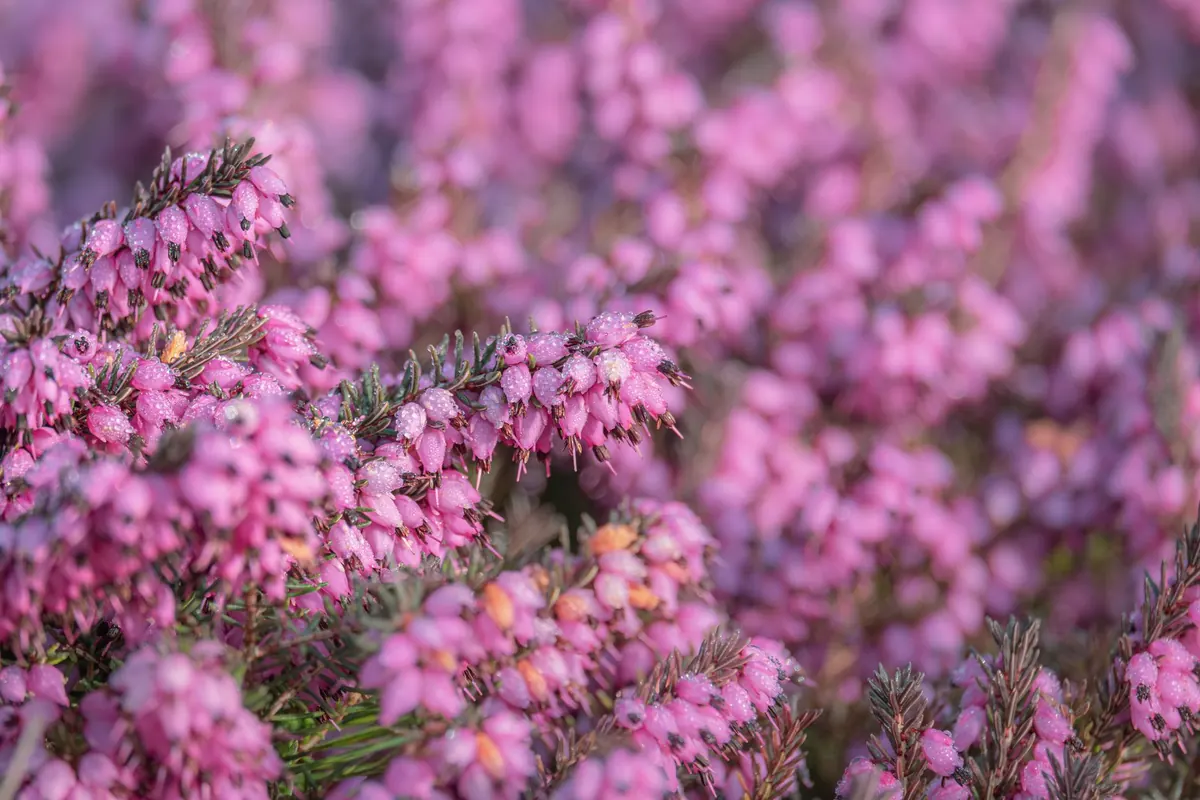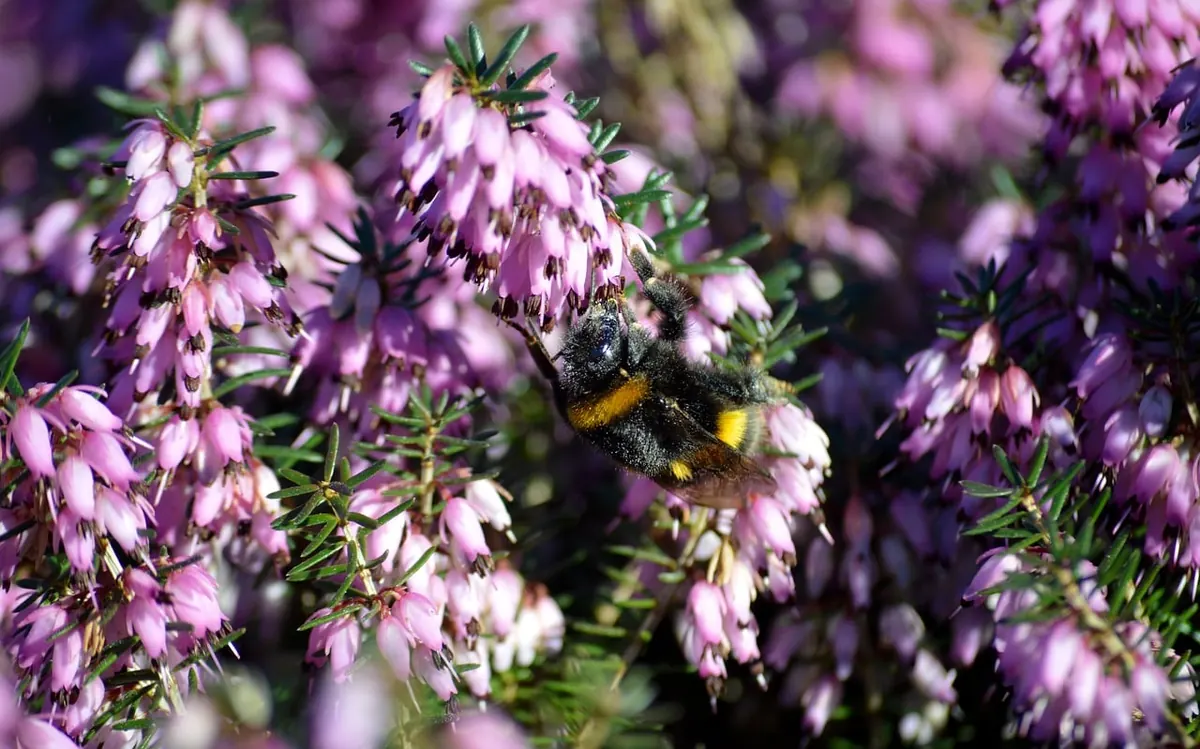
Heathers have an image problem. They look like plants that need a moor and a horizon, which is why so few small gardens have any. In practice they are among the most forgiving evergreens you can grow: compact cultivars stay knee-high or lower, hold their foliage colour through winter, shrug off wind, and settle happily into a pot. Give them acid soil, sun and sharp drainage and they will look established for years. Here are eight compact varieties worth the space, and ways to use them.
First, Get the Soil Right
Nearly everything else follows from this. Callunas — the summer-flowering Scottish heather — need acid soil, roughly pH 4.5 to 6. So does Daboecia. Two ericas are the useful exceptions: Erica carnea (winter heather) and Erica vagans (Cornish heath) will cope with neutral to slightly alkaline ground, which makes them the safe choice if your soil is chalky or thin over rubble.
If you are unsure which you have, a cheap pH test kit settles the question in five minutes. Anything at 6.5 or below is workable for callunas; at 7 or above, stop arguing with the ground and plant in containers instead. It is worth testing in two or three spots, because a small garden can vary more than you expect — the bed against a rendered wall is often far more alkaline than the open border a few feet away.
If you cannot test or improve your soil, grow heathers in containers of ericaceous compost. That is not a compromise. Heathers in pots often look better than heathers in heavy clay, because you control both drainage and moisture. Water with rainwater where you can; tap water in hard-water areas gradually raises the pH and the plants turn yellow and sulk.
Eight Compact Heathers Worth the Space
Callunas for Summer and Autumn
Calluna vulgaris 'Kinlochruel' carries double white flowers over bright green foliage from late summer, and the faded flower spikes keep their shape well into winter. It rarely tops 25cm, which makes it a first-rate pot plant.
Calluna vulgaris 'Dark Beauty' is the one to grow if you want real depth of colour: dense, semi-double crimson spikes on a tight, upright plant of around 25cm, with purple-tinged tips in spring. It reads as a dark accent in a border rather than a filler.
Calluna vulgaris 'Silver Knight' has silver-grey foliage that lifts a planting scheme all year, then flowers in soft purple in late summer. Neatly domed and slow, it suits the front of a bed or a low trough.
Calluna vulgaris 'Wickwar Flame' is the show-off of the group. The foliage opens gold, deepens through summer and turns orange and red in cold weather, with mauve flowers in late summer. It is mid-sized rather than tiny, so give it the back of a border or a slightly larger pot.
Calluna vulgaris 'J. H. Hamilton' is one of the smallest callunas you can buy — compact, tight and smothered in double pink flowers. At around 15cm it is ideal for the very front of a border, a trough or a shallow bowl.
Winter-Flowering Ericas
Erica carnea 'Vivellii' starts flowering in midwinter and carries on into early spring, with deep pink flowers held against dark foliage that bronzes in cold weather. It gives you colour in the months when almost nothing else does.
Erica carnea 'Springwood White' is lower and more spreading, with clean white flowers over a long season. Planted in a group, it makes a tidy evergreen carpet — the best of the eight for edging a path or softening the front of a raised bed.
A Bell Heather for Late Colour
Daboecia cantabrica 'Praeger's Variety' is compact and small-leaved, with purple-pink bells from midsummer into autumn. Most daboecias get leggy and sprawling; this one stays low enough for a small garden and flowers over a remarkably long stretch.
Heathers in Containers
This is where small gardens win. Use a pot at least 25cm across for a single compact heather, and add a layer of gravel or broken crocks before filling with ericaceous compost. Set the plant so the crown sits level with the surface — bury it and it rots. Finish with a 2cm layer of grit or bark, which keeps the foliage clean and slows evaporation.
Grouping works better than scattering. Three pots in a triangle, with one taller plant behind two low ones, gives structure to a patio corner. Combine a heather with a dwarf conifer or a Japanese maple for year-round shape, and underplant with snowdrops or crocus, which push through before the heathers wake up. In summer, containers may need water every few days; in winter, cut right back and let the rain do the work.
Two container details are easy to get wrong. First, heathers hate sitting wet: raise pots onto feet so excess water drains away freely. Second, they exhaust ericaceous compost in two or three seasons, so lift and replant into fresh compost every second spring rather than simply top-dressing. A pot that has gone pale and thin is usually telling you the compost, not the plant, is finished.
Borders, Edges and Gravel Gardens
Plant heathers in odd-numbered groups — three, five, seven. A single plant looks lost, but a cluster reads as a deliberate feature. Space compact varieties roughly 25cm to 35cm apart and let them knit together; weeds then struggle to find room.
Good companions are anything that likes the same conditions: dwarf pines and other slow conifers, dwarf rhododendrons and azaleas, Japanese maples for height, and low bulbs — snowdrops, crocus, Cyclamen coum — for early interest before the heathers come into their own. A gravel mulch over the whole group ties it together and keeps the foliage dry and clean. Avoid anything vigorous or leafy that will smother these slow growers; the whole point of a heather planting is that it stays low and legible.
Most heathers fail in small gardens for two reasons only: the wrong soil, and being planted as lonely singles. Fix both and they become almost maintenance-free.
Planting and the First Year
Autumn and early spring are the two windows that matter. Autumn planting lets roots settle while the soil is still warm; spring works too, but you will be watering through the first summer. Buy pot-grown plants rather than bare-root — heathers establish without a check that way.
- Dig a hole twice the width of the rootball and no deeper. Heathers are shallow-rooted and resent being buried.
- Mix the backfill with ericaceous compost and a handful of grit if drainage is doubtful.
- Firm gently, water well, then mulch with 5cm of bark or composted pine, keeping it clear of the crown.
- Water every few days through the first season, then only in dry spells.
Trim after flowering, not before. Shearing spent flower spikes back to the green growth keeps callunas dense and stops them opening up in the middle — but never cut into old, leafless wood, because it will not regrow. For most of the varieties here, one pass with shears each spring is the entire job.
Three Small-Garden Schemes That Work
- The winter pot. One Erica carnea 'Vivellii' in a 30cm pot, underplanted with white crocus, with a small variegated ivy trailing at the edge. Flowers from December to March.
- The hot corner. 'Wickwar Flame' behind 'Dark Beauty', both in the ground in acid soil, with a gravel mulch. Gold and crimson from late summer, then the foliage takes over and turns red in cold snaps.
- The silver edge. A run of five 'Silver Knight' along the front of a border, with Erica carnea 'Springwood White' behind it. Grey all year, purple in late summer, white in late winter.
None of these needs more than half a square metre. That, in the end, is the argument for heathers in a small garden: they give you evergreen structure, several seasons of colour and almost no work, in a space you would otherwise fill with bare soil.
Photo: neelam279 / Pixabay